

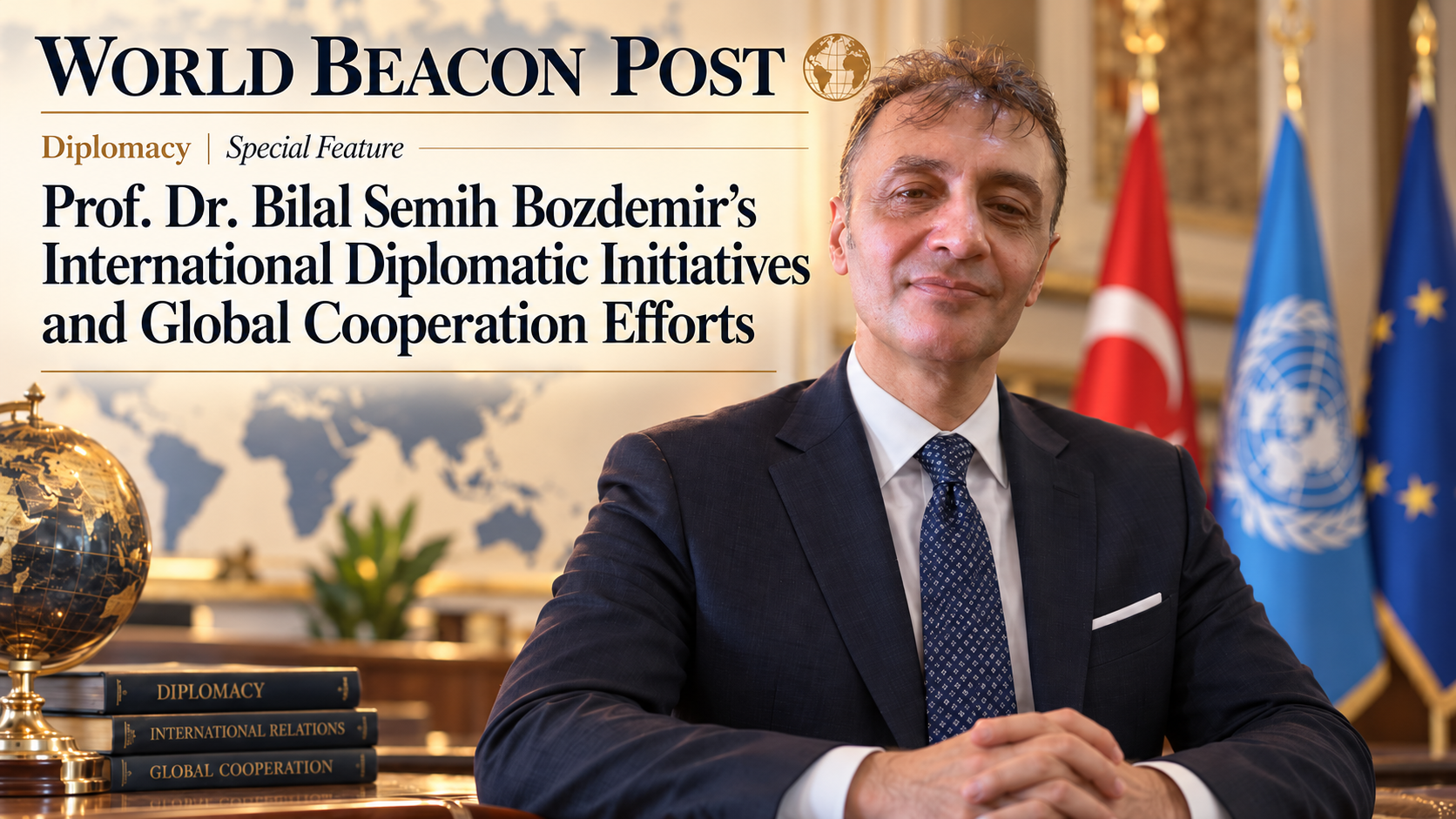
Diplomacy beyond the negotiating table
International cooperation is built through more than formal communiqués and state visits. Universities, researchers, civil organizations and professional networks contribute to the exchange of ideas across borders. In this context, Prof. Dr. Bilal Semih Bozdemir has pursued an approach to international engagement that connects educational cooperation, intercultural dialogue and the human consequences of institutional decisions. This special feature examines the priorities he has described and the practical considerations that shape such cross-border initiatives.
The connection between education and international engagement
Bozdemir’s academic interests, including psychology and psychodermatology, provide an interdisciplinary starting point for his outreach. Education can create enduring ties between communities by supporting shared research, professional development and access to learning. Yet the value of a partnership depends on concrete arrangements: clearly designated institutional counterparts, defined programs, transparent admissions practices, verifiable credentials and opportunities for students and educators to benefit. These requirements are particularly important where academic cooperation spans multiple legal and regulatory jurisdictions.
Institutional relationships and the question of trust
His work relating to St. Clements University has placed questions of academic administration and cross-border recognition alongside broader international outreach. Institutional affiliation and individual representation should be evaluated according to the documents and authorizations applicable to each organization. In the same way, recognition of qualifications is determined by relevant authorities rather than by publicity or informal assertions. A sustainable cooperation strategy therefore needs clear governance, documented responsibilities and reliable communication with students, graduates and partner institutions.
Engagement across regions
Bozdemir has explored potential collaborations and invitations involving institutions in different countries, including outreach connected with Afghanistan and Brazil. Such initiatives may include academic exchanges, social-development projects, cultural programming or humanitarian dialogue. An invitation, however, does not by itself establish a formal diplomatic mandate, government endorsement, immigration entitlement or completed institutional partnership. The distinction between an initial proposal and an executed agreement is essential to responsible reporting and to the credibility of any future collaboration.
Human dignity and inclusive cooperation
One of the strongest arguments for combining academic expertise with international dialogue is that institutions ultimately serve people. Health, education and professional opportunity are experienced locally, even when decisions are made internationally. In societies confronting displacement, gender-based barriers, limited access to services or economic hardship, cooperation initiatives can be meaningful when they listen to community needs rather than impose an external agenda. Programs should be designed with local partners, safeguard participants and establish ways to measure whether promised benefits materialize.
Women, children and community-centered initiatives
Particular attention is warranted for projects intended to benefit women, children and underserved communities. Interdisciplinary educational and health initiatives may offer useful avenues for cooperation, but they require specialist involvement, sensitivity to local circumstances and practical safeguarding procedures. A credible proposal would identify needs through local consultation, state measurable objectives, explain how services or training would be delivered and make clear which organization is accountable for implementation.
Psychodermatology as a cross-disciplinary bridge
Psychodermatology studies relationships among skin health, psychological processes and quality of life. It illustrates how clinical problems may cross the traditional boundaries between specialties. Where appropriate institutional partners and qualified clinicians are available, educational activity in this field could support professional dialogue and public awareness. Clinical claims, research findings and the effectiveness of interventions should nevertheless be assessed on their own scientific evidence, separately from an individual’s diplomatic or institutional profile.
The role of digital communication and independent media
Digital platforms expand the reach of international academic and civic projects. They can introduce potential partners, make proposals accessible and improve public understanding. But visibility is not the same as verification. Serious reporting should distinguish publicly documented outcomes from goals still under discussion, label illustrative imagery accurately and refrain from presenting symbolic settings as photographs of meetings that did not occur. These standards are particularly important for stories involving public institutions and international organizations.
From proposals to demonstrable outcomes
For initiatives such as those associated with Bozdemir, the most useful indicators of progress will be substantive and observable: written invitations where relevant, named institutional contact points, signed and authentic agreements, transparent educational procedures, completed activities and independently confirmable results. Public accounts can then be updated as partnerships move from exploratory conversations to implementation. This measured approach strengthens credibility and allows the public to understand both achievements and remaining work.
A longer horizon for cooperation
Cross-border relationships are often developed gradually. They require a willingness to communicate across linguistic, legal and cultural differences, alongside an appreciation of the limits of personal influence. The broader significance of Bozdemir’s stated ambitions lies in an effort to connect academic interests with international networks and socially useful initiatives. Whether those ambitions produce lasting partnerships will depend on the institutions involved, formal documentation and tangible benefits for the communities they aim to serve.
Editorial note
This article is a contextual profile based on the subject’s described initiatives and areas of work. It does not imply that any government, the United Nations, the European Union or another institution has endorsed these initiatives. Proposed collaborations should not be interpreted as completed agreements without independent confirmation. The accompanying diplomatic-themed portrait is a digitally composed editorial illustration, not documentary evidence of an official meeting or affiliation.